
POSTERIOR CERVICAL FUSION • OKLAHOMA CITY
Posterior Cervical Fusion in Oklahoma City
Posterior cervical fusion stabilizes selected bones in the neck through an incision at the back. Dr. Jeffrey Moore can review your symptoms and imaging to discuss whether this approach fits your condition, what it involves, and what to expect.
- Stabilization of selected neck vertebrae
- Bone graft to support fusion
- Decompression when appropriate
- Individualized surgical planning
Most neck problems do not require fusion. The decision depends on spinal stability, nerve or spinal cord pressure, alignment, and your overall health.
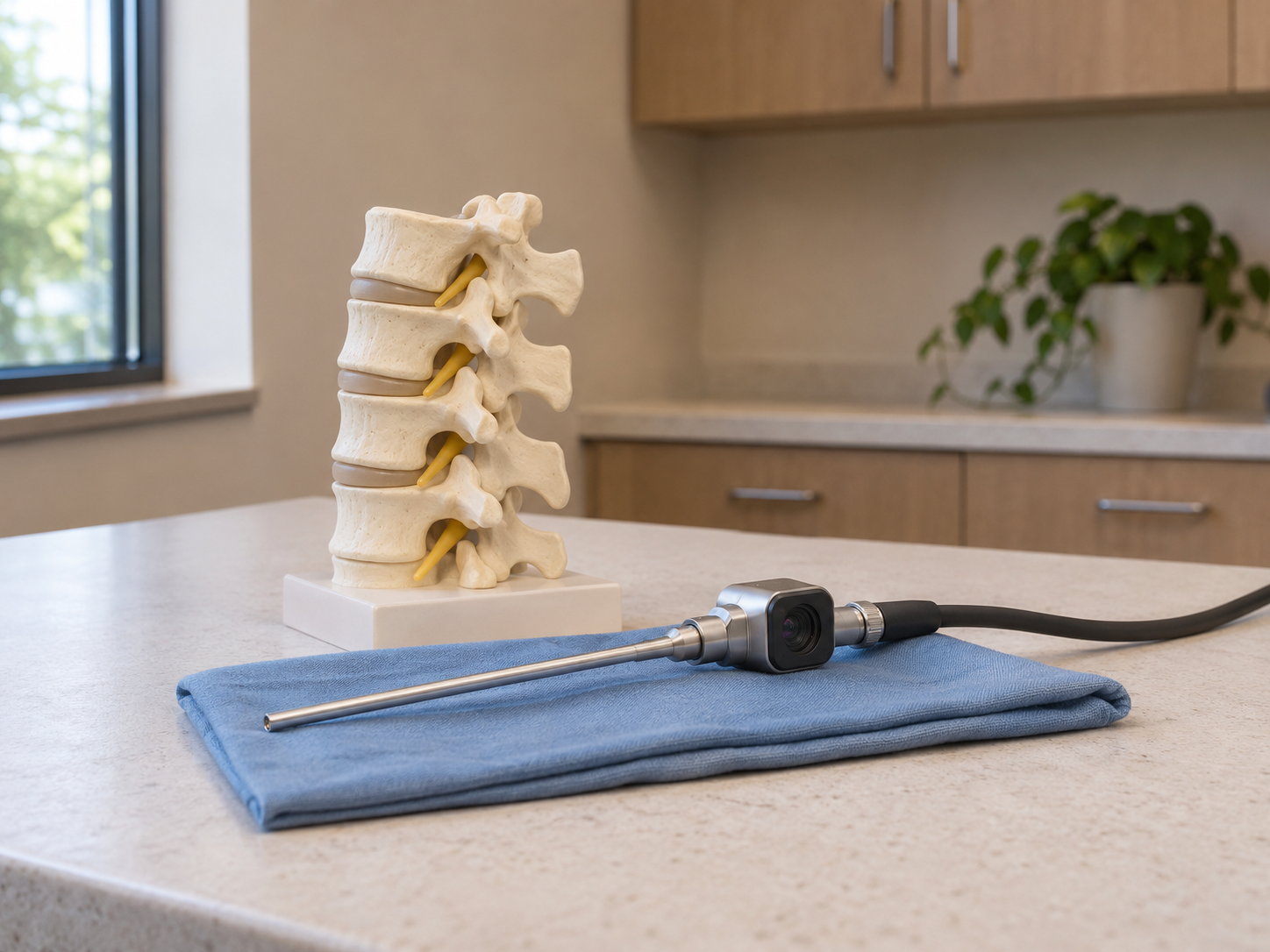
Fellowship-trained orthopedic spine care for adults in Oklahoma City and surrounding communities.
What Is Posterior Cervical Fusion?
Posterior means the back of the neck, and cervical refers to the neck portion of the spine. Fusion uses bone graft to help two or more vertebrae heal together into a solid connection.
Screws and rods commonly hold the treated bones in position while fusion develops. When pressure on the spinal cord or nerves also needs treatment, decompression may be performed during the same operation.
Fusion provides stability; decompression creates space for neural structures. These serve different purposes, and your surgical plan may require one or both.
Stability with a Purpose
- Reduce abnormal movement at treated levels
- Support appropriate spinal alignment
- Add stability when decompression requires it
- Choose an approach suited to your anatomy
When Fusion May Be Considered
A posterior approach may be considered for certain neck conditions when stabilization is needed. Your examination, imaging, alignment, and the number of affected levels help guide the recommendation.
Cervical Spinal Instability
Excessive movement between neck vertebrae may require stabilization when it causes significant symptoms or threatens spinal stability.
Spinal Cord Compression
For cervical myelopathy, decompression may relieve pressure on the spinal cord. Fusion may be added when stability or alignment needs support.
Multilevel Cervical Stenosis
Narrowing across several neck levels may be addressed from behind when anatomy and alignment make this approach appropriate.
Fractures or Dislocations
Certain unstable neck injuries require fusion to hold the vertebrae securely as they heal and protect the spinal structures.
Selected Cervical Deformities
Abnormal neck alignment may require stabilization as part of a correction. Some deformities need a combined front-and-back approach.
Revision or Combined Surgery
Posterior fixation may support a prior fusion that has not healed or supplement an anterior operation when additional stability is needed.
Potential Benefits.
Important Limitations.
The goals may include improved stability and, when decompression is performed, relief of nerve or spinal cord pressure. With myelopathy, preventing further neurological decline may be a key objective.
Fusion reduces motion at the treated levels. It cannot guarantee pain relief or reverse established spinal cord injury. The expected benefits depend on your diagnosis and the extent of surgery.
Risks, Recovery, and What to Expect
Risks include infection, bleeding, spinal fluid leakage, nerve or spinal cord injury, and anesthesia complications. Other concerns include new shoulder or arm weakness, incomplete fusion, hardware problems, adjacent-level degeneration, and possible further surgery.
A hospital stay is commonly needed. Neck and shoulder soreness can be substantial early on, and bone fusion develops over months. Your team will tailor walking, lifting restrictions, rehabilitation, and follow-up imaging to your recovery.
Follow your surgical team’s instructions for wound care and activity. Seek urgent care for new limb weakness or loss of bowel or bladder control; report worsening wound redness, drainage, or fever promptly.
Before Your Procedure
- Review medicines and supplements with the team
- Discuss smoking cessation and bone health
- Complete recommended testing and medical clearances
- Arrange transportation and help at home
- Confirm collar instructions and follow-up appointments
Is Posterior Cervical Fusion Right for You?
Bring your symptoms, questions, and available imaging. The consultation helps clarify whether your neck problem requires stabilization, decompression, or nonsurgical care.
During your consultation, you and Dr. Moore can:
- Discuss pain, weakness, hand coordination, and balance
- Review your examination and cervical imaging
- Consider prior treatments and surgery
- Compare posterior fusion, other operations, and nonsurgical care
- Discuss motion changes, risks, and recovery
The right approach depends on your condition and goals. Posterior fusion is one option, not the default treatment for neck pain.
Questions worth asking.
Will fusion limit my neck movement?
Fusion stops movement at the treated levels. How much stiffness you notice depends on which vertebrae are joined and how many levels are involved.
Will I need a neck brace?
Some patients are prescribed a cervical collar, while others are not. Follow the instructions for your specific operation rather than choosing a brace on your own.
How soon can I return to work?
Timing depends on the extent of fusion, healing, and your job’s demands. Desk work and heavy physical work may require different recovery periods; your surgeon will guide clearance.
What should I bring to my consultation?
Bring available imaging and reports, a medication list, details of previous treatments or surgery, and the questions you want answered.
Can I ask for a second opinion?
Yes. Bring the recommendation you received and any relevant records so you can discuss the reasoning, alternatives, and next steps.
Explore Your Cervical Fusion Options
Get individualized answers about posterior cervical fusion, alternative approaches, and the balance between stability, movement, and recovery.
- Review of available imaging and previous treatments.
- Explanation of stabilization and decompression options.
- A plan based on your health, anatomy, and goals.
Call the office or request an appointment online to discuss your next step.