

Imagine your spinal column as a busy highway carrying vital signals between your brain and the rest of your body. These signals travel through nerves that branch off the spinal cord. When you see terms like “nerve compression” on your MRI report, it means there’s a roadblock on that highway, putting pressure on one or more of these crucial nerves.
Dr. Jeffrey Moore, a fellowship-trained Orthopedic Spine Surgeon in Oklahoma City, understands that medical jargon can be confusing. He believes in clear, plain English explanations to help you understand your condition. This article will break down what “nerve compression” truly means, what causes it, how it’s diagnosed, and how it can be treated to help you find relief and get back to living life to the fullest. Whether you’re in OKC, Edmond, Norman, Yukon, Moore, Mustang, Midwest City, or nearby areas, understanding your MRI report is the first step toward effective treatment.
Before we dive into compression, let’s briefly review the amazing structure of your spine.
Your Spinal Bones (Vertebrae)
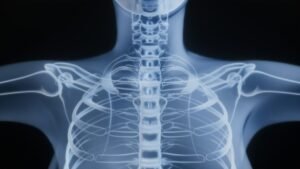
Your spine is made up of 33 individual bones called vertebrae, stacked like building blocks. These bones protect your spinal cord and allow you to bend and twist.
The Cushions (Discs)
Between most vertebrae are soft, gel-filled cushions called intervertebral discs. Think of them as shock absorbers that prevent your bones from rubbing together and provide flexibility.
The Nerves (Off-Ramps)
Your spinal cord runs through a central canal within these vertebrae. At each level, nerves branch off the spinal cord, exiting through small openings on the sides of your spine called foramina (singular: foramen). These nerves carry signals to and from your arms, legs, and torso, allowing you to feel sensations and move your muscles.
If you’re looking to understand more about the implications of nerve compression as seen on a spine MRI, you might find it helpful to read a related article on the topic of spinal health and treatment options. For expert insights and guidance, you can visit the page of Dr. Jeffrey Moore, a specialist in spine care, at this link.
What Does “Nerve Compression” Really Mean?
When your MRI report mentions “nerve compression,” it signifies that something within or around your spinal column is pressing on one of these nerves or the spinal cord itself. This pressure can disrupt the normal flow of signals along the nerve, leading to various uncomfortable symptoms.
The “Squeeze”
Imagine a garden hose with water flowing through it. If you step on the hose, the water flow is restricted. Similarly, nerve compression means a nerve is being “squeezed” or impinged upon.
Why It Matters
This squeeze can cause inflammation, irritation, and even damage to the nerve over time. Because nerves are responsible for transmitting sensation, movement, and bodily functions, nerve compression can manifest in a wide range of symptoms, often far from the actual compression site. For example, a pinched nerve in your lower back may cause pain and numbness all the way down your leg.
Common Causes of Nerve Compression in the Spine

Nerve compression isn’t a single condition; it’s a symptom caused by various underlying issues. Here are some of the most common culprits Dr. Moore sees in his patients from OKC and surrounding communities:
1. Herniated Discs
This is one of the most frequent causes. Remember those jelly-filled discs between your vertebrae? If the outer, tougher layer of a disc tears, the soft, inner gel-like material can bulge out or “herniate.”
How a Herniated Disc Causes Compression
When the disc material pushes out, it can directly press on nearby spinal nerves or the spinal cord. This is often described as a “pinched nerve.” The released disc material can also trigger inflammation, further irritating the nerve.
2. Spinal Stenosis
Stenosis means narrowing. Spinal stenosis refers to a narrowing of the spaces within your spine, which can put pressure on the spinal cord and the nerves that travel through the spine.
Types of Spinal Stenosis
- Central Canal Stenosis: Narrowing of the main spinal canal where the spinal cord runs.
- Foraminal Stenosis: Narrowing of the openings (foramina) where the nerves exit the spinal canal.
What Causes Spinal Stenosis?
Spinal stenosis is often caused by age-related wear and tear:
- Osteoarthritis: Degeneration of the joints in the spine can lead to bone spurs (osteophytes) forming, which can protrude into the spinal canal or foramina.
- Thickened Ligaments: Ligaments that help stabilize the spine can thicken over time, encroaching on the nerve spaces.
- Bulging Discs: While distinct from a full herniation, a broadly bulging disc can also contribute to narrowing.
3. Bone Spurs (Osteophytes)
As mentioned with osteoarthritis, bone spurs are bony growths that develop along the edges of bones. These can grow into the spaces where nerves are located and compress them.
4. Spondylolisthesis
This condition occurs when one vertebra slips forward over the one below it. This misalignment can reduce the space available for nerves, leading to compression.
5. Tumors or Cysts
Less common, but important to consider, are tumors or cysts that can grow within or near the spinal column. These growths can physically occupy space and press on nerves.
6. Spinal Injuries
Trauma from accidents or falls can lead to fractures, dislocations, or swelling that compresses nerves.
Symptoms of Nerve Compression: When Should You See a Doctor?

The symptoms of nerve compression can vary widely depending on which nerve is compressed, where it’s compressed, and how severe the compression is. However, here are some common signs that warrant a visit to Dr. Moore in OKC:
Pain
This is the most common symptom. The pain can be:
- Sharp, shooting, or burning: Often described as an electrical shock.
- Radiating: Pain that travels down an arm or leg (like sciatica).
- Localized: Dull ache or sharp pain at the site of compression.
- Worsened by certain activities: Like sitting, standing, walking, or bending.
Numbness or Tingling (Paresthesia)
Often described as a “pins and needles” sensation, or an area of skin that feels “asleep.” This happens because the nerve’s ability to transmit sensory signals is impaired.
Weakness
If a nerve that controls muscles is compressed, you might experience weakness in the affected limb. This could manifest as difficulty lifting your arm, gripping objects, or a foot drop where you struggle to lift the front part of your foot.
Loss of Reflexes
A doctor might check your reflexes. Reduced or absent reflexes can indicate nerve damage or compression.
Bowel or Bladder Changes (Red Flag!)
This is a critical symptom that demands immediate medical attention. If you experience new or worsening difficulty with bladder or bowel control, along with severe back pain, numbness in the groin area (saddle anesthesia), or progressive weakness in both legs, it could indicate cauda equina syndrome. This is an emergency and requires urgent evaluation.
If you experience any of these symptoms, especially radiating pain, numbness, weakness, or any red flags, it’s crucial to seek expert care. Dr. Moore and his team are ready to help patients from Edmond, Norman, Yukon, Moore, Mustang, Midwest City, and beyond.
Understanding nerve compression on a spine MRI is crucial for diagnosing various spinal conditions. For those interested in exploring this topic further, a related article discusses the most common cervical spine complications and their implications for nerve health. You can read more about it in this informative piece on cervical spine complications, which provides insights into how these issues can affect overall well-being.
Diagnosing Nerve Compression: Beyond the MRI
| Term | Definition |
|---|---|
| Nerve Compression | Occurs when a nerve is pressed or squeezed by surrounding tissues, such as bones, cartilage, muscles, or tendons, leading to pain, numbness, or weakness. |
| Spine MRI | A medical imaging technique that uses a magnetic field and radio waves to create detailed images of the spine and surrounding tissues. |
While an MRI report might initially flag “nerve compression,” that’s just one piece of the puzzle. Dr. Moore uses a comprehensive approach to get a full understanding of your condition.
1. Detailed Medical History and Physical Exam
This is always the first step. Dr. Moore will ask about your symptoms, when they started, what makes them better or worse, and your medical history. He’ll then perform a thorough physical exam to assess your range of motion, muscle strength, sensation, and reflexes. This helps him pinpoint the likely location of the compression.
2. Imaging Studies
- X-rays: While X-rays don’t show nerves or discs, they are excellent for visualizing bone structure. They can reveal bone spurs, spinal misalignment (like spondylolisthesis), fractures, and signs of arthritis, which are often underlying causes of compression.
- MRI (Magnetic Resonance Imaging): This is the gold standard for visualizing soft tissues like nerves, spinal cord, and discs. An MRI provides detailed images that clearly show disc herniations, spinal stenosis, thickened ligaments, and any direct pressure on nerves. It’s why “nerve compression” is often first identified on an MRI report.
- CT Scan (Computed Tomography): Sometimes used when an MRI is not possible or to get a more detailed view of bone structures, especially after trauma or for surgical planning.
3. Electromyography (EMG) and Nerve Conduction Studies (NCS)
These tests measure the electrical activity of muscles and nerves. They can help confirm nerve damage, identify the specific nerve affected, and determine the severity of the compression, especially when the diagnosis isn’t clear from imaging alone.
Dr. Moore carefully reviews all these findings to connect your symptoms with the objective evidence, ensuring an accurate diagnosis for his patients in and around Oklahoma City.
Treatment Options for Nerve Compression: A Path to Relief
The good news is that most cases of nerve compression can be successfully managed without surgery. Dr. Moore believes in starting with conservative, non-surgical treatments whenever appropriate, reserving advanced surgical options for when they are truly necessary.
1. Conservative (Non-Surgical) Care
- Rest and Activity Modification: Briefly resting and avoiding activities that aggravate your symptoms can help reduce inflammation. However, prolonged bed rest is generally not recommended.
- Over-the-Counter Medications: NSAIDs (non-steroidal anti-inflammatory drugs) like ibuprofen or naproxen can help reduce pain and inflammation.
- Physical Therapy (PT): A cornerstone of treatment. A physical therapist will guide you through exercises to strengthen core muscles, improve flexibility, correct posture, and decompress the nerve. They may also use modalities like heat, ice, or ultrasound.
- Prescription Medications: Muscle relaxants, oral corticosteroids (for short-term inflammation control), or neuropathic pain medications (for nerve-specific pain) might be prescribed.
2. Injections
When conservative measures aren’t enough, targeted injections can provide significant relief.
- Epidural Steroid Injections: These inject an anti-inflammatory steroid medication directly into the space around the affected nerves in the spine. This can reduce inflammation and alleviate pain, allowing you to participate more effectively in physical therapy.
- Nerve Block Injections: These involve injecting an anesthetic and/or steroid near a specific nerve to temporarily block pain signals and reduce inflammation.
3. Pain Management Strategies
For some patients, a comprehensive pain management approach, potentially involving a specialized pain management physician, might be recommended to help manage chronic nerve pain effectively.
4. Advanced Surgical Options (When Necessary)
Surgery is typically considered when conservative treatments have failed to provide lasting relief, when symptoms are severe and debilitating, or when there are “red flag” symptoms like progressive weakness, significant numbness, or bowel/bladder changes. Dr. Moore is a fellowship-trained orthopedic spine surgeon offering the most advanced and effective surgical techniques when surgery is the best course of action.
Goals of Spine Surgery for Nerve Compression
The primary goal of surgery for nerve compression is decompression – to remove the pressure from the affected nerve or spinal cord.
Common Surgical Procedures for Nerve Compression:
- Laminectomy/Laminotomy: This involves removing a portion of the vertebral bone (lamina) to create more space for the spinal cord and nerves. A laminotomy removes only a part of the lamina, while a laminectomy removes the entire lamina. These can be performed using minimally invasive techniques where smaller incisions and specialized instruments are utilized, leading to less tissue damage, less pain, and quicker recovery times for patients.
- Discectomy/Microdiscectomy: If a herniated disc is compressing the nerve, a discectomy involves removing the problematic disc material. A microdiscectomy uses a microscope and very small instruments through a small incision to precisely remove the herniated part of the disc while preserving as much healthy tissue as possible.
- Foraminotomy: This procedure enlarges the bony opening (foramen) where a spinal nerve exits, relieving pressure caused by bone spurs or disc material in that space.
- Spinal Fusion: In some cases, particularly if the spine is unstable or if significant bone removal is required, spinal fusion may be necessary to stabilize the vertebrae. This involves joining two or more vertebrae together, often with bone grafts and metal hardware (screws, rods), to prevent movement between them.
- Artificial Disc Replacement: For certain patients with disc herniation causing nerve compression, particularly in the neck (ACDF – Anterior Cervical Discectomy and Fusion), a cervical disc replacement might be an alternative to fusion. This procedure replaces the damaged disc with an artificial disc designed to maintain motion at that spinal segment.
Dr. Moore uses state-of-the-art technologies, including computer-guided navigation, when appropriate, to enhance precision and safety during complex spinal surgeries, ensuring the best possible outcomes for his patients throughout the OKC metro area.
FAQs About Nerve Compression
Q: Can nerve compression heal on its own?
A: Yes, many cases of nerve compression, especially those due to a new disc herniation, can improve with conservative treatments like rest, medication, and physical therapy. Your body has an amazing capacity to heal.
Q: How long does it take for nerve compression to get better?
A: Recovery time varies greatly depending on the cause, severity, and individual factors. Minor compression might resolve in a few weeks, while more complex cases can take months, and some may require ongoing management.
Q: What is a “pinched nerve”? Is it the same as nerve compression?
A: Yes, “pinched nerve” is the common term people use to describe nerve compression in the spine. It means that something (like a disc or bone spur) is pressing on a nerve, causing symptoms.
Q: When is surgery absolutely necessary for nerve compression?
A: Surgery is usually considered when conservative treatments have failed, symptoms are severe and debilitating, or if “red flag” symptoms like progressive muscle weakness, significant loss of sensation, or bowel/bladder dysfunction (cauda equina syndrome) are present.
Take the Next Step Towards Relief
Understanding “nerve compression” on your MRI report is the first step toward finding relief. Dr. Jeffrey Moore is a fellowship-trained Orthopedic Spine Surgeon committed to providing compassionate, clear, and confident care to patients throughout Oklahoma City, Edmond, Norman, Yukon, Moore, Mustang, Midwest City, and nearby areas. He will thoroughly evaluate your condition, discuss all available treatment options in plain language, and work with you to create a personalized plan to alleviate your pain and improve your quality of life.
Don’t let nerve compression control your life. Take control of your health. Call (405) 645-5475 to schedule a consultation, book online, or request a FREE MRI review today.
FAQs
What is nerve compression on a spine MRI?
Nerve compression on a spine MRI refers to the condition where a nerve in the spine is being pressed on or squeezed by surrounding tissues, such as a herniated disc, bone spur, or narrowing of the spinal canal.
What are the symptoms of nerve compression in the spine?
Symptoms of nerve compression in the spine can include pain, numbness, tingling, weakness, or a burning sensation in the affected area. These symptoms can radiate along the path of the compressed nerve, such as down the arm or leg.
What causes nerve compression in the spine?
Nerve compression in the spine can be caused by a variety of factors, including herniated discs, bone spurs, spinal stenosis, degenerative disc disease, or injury. These conditions can lead to the compression of nerves in the spinal cord or exiting the spinal column.
How is nerve compression in the spine diagnosed?
Nerve compression in the spine is typically diagnosed through a combination of physical examination, medical history, and imaging tests such as MRI or CT scans. These tests can help identify the location and severity of the nerve compression.
What are the treatment options for nerve compression in the spine?
Treatment options for nerve compression in the spine may include physical therapy, medication, steroid injections, or in severe cases, surgery to relieve the pressure on the affected nerve. The specific treatment approach will depend on the underlying cause and severity of the nerve compression.